
News
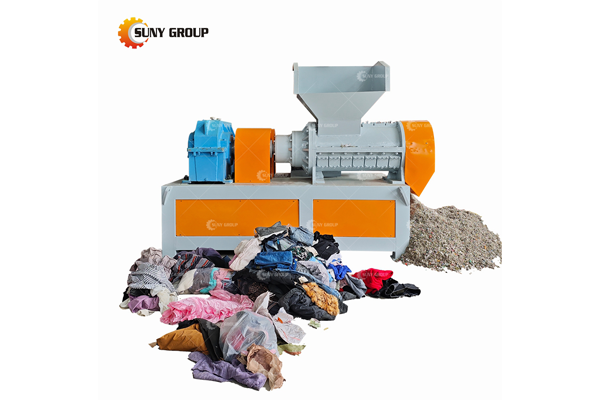
small scale fabric shredder for mixed fabric clothing
Mixed fabric clothing is one of the most challenging materials in textile recycling. Garments may contain cotton, polyester, nylon, elastic fibers, buttons, zippers, labels, and seams—all within a single item. A small-scale fabric shredder provides an efficient first-stage solution for reducing these materials into manageable pieces for further sorting, recycling, or reuse.
Inspired by industrial fiber recycling equipment with spiral shredding technology, this type of machine is designed to process soft, bulky, and irregular textile waste with stable, continuous cutting performance.
Designed for Mixed Clothing Waste
Unlike clean production offcuts, post-consumer clothing often arrives in different sizes, thicknesses, and material compositions. A reliable fabric shredder can handle items such as:
- Used clothing and second-hand textiles
- Cotton, polyester, denim, and blended fabrics
- Knitted garments, towels, rags, and fabric scraps
- Nonwoven textiles and soft fiber waste
- Pre-sorted textile waste from collection, sorting, or garment factories
Before shredding, metal accessories such as large buttons, buckles, and zippers should be removed when possible. This helps protect the cutting system and improves the quality of the shredded textile output.
Efficient Size Reduction for Textile Recycling
The purpose of shredding is not only to reduce volume. It also prepares mixed clothing for the next recycling process. Shredded fabrics are easier to convey, store, sort, open, and feed into downstream equipment.
Depending on the recycling workflow, shredded textile material can be used for:
- Fiber opening and carding
- Textile sorting and separation
- Refuse-derived fuel preparation
- Insulation and soundproofing materials
- Automotive filling and nonwoven products
- Cleaning cloth and regenerated fiber production
For small and medium recycling operations, a compact fabric shredder can turn loose, difficult-to-handle garments into a more uniform material stream.
Spiral Shredding Design for Soft Fiber Materials
Fiber materials behave differently from rigid plastics or metal scrap. Clothing can wrap around shafts, stretch during cutting, and create dust or loose fibers. A shredder designed for textiles should use a cutting structure suitable for soft materials, with controlled feeding and dependable discharge.
Industrial spiral shredding systems are commonly valued for their ability to pull, tear, and cut bulky fiber materials progressively. This approach helps achieve consistent material reduction while minimizing manual handling.
Key considerations when selecting a small-scale fabric shredder include:
- Material type and proportion of mixed fabrics
- Required output size
- Hourly processing capacity
- Presence of buttons, zippers, or other contaminants
- Available floor space and power supply
- Need for conveyors, dust collection, or downstream fiber-opening equipment
A Practical Solution for Growing Textile Recycling Businesses
As textile waste volumes continue to grow, small-scale recycling facilities need equipment that is practical, adaptable, and easy to integrate into a production line. A fabric shredder for mixed clothing can be the foundation of an efficient textile recycling system.
By reducing mixed garments into smaller pieces, recyclers can improve transportation efficiency, simplify material handling, and create more opportunities for resource recovery. Whether the final goal is fiber regeneration, nonwoven production, fuel preparation, or waste-volume reduction, the right shredding equipment helps transform discarded clothing into usable material.
Contact Us
Address
Henan Communication Industrial Park, Economic Development Zone, Zhengzhou City, Henan Province, China