
News
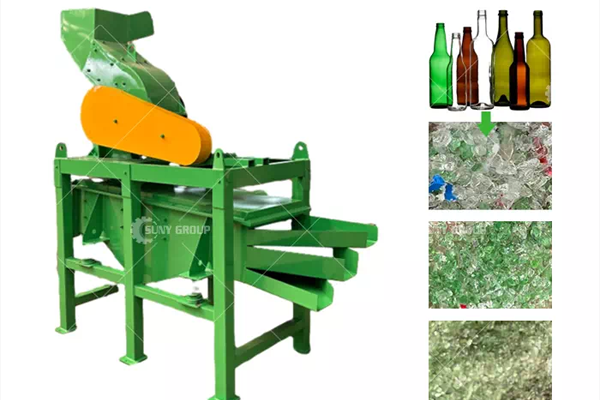
What types of waste glass can glass crushing and sorting machines recover?
Glass waste is everywhere—broken bottles, construction debris, industrial scraps, and discarded containers. But what most people see as useless trash is actually a high-value recyclable resource. With modern glass crushing and sorting machines, this “waste” can be transformed into reusable raw materials for construction, manufacturing, and industrial fillers.
So, what exactly can these machines recover?
The answer is broader than you think. From everyday bottles to industrial-grade glass sheets, advanced systems can efficiently crush, separate, and classify multiple types of waste glass into usable fractions. In this article, we break down the key types of waste glass recoverable, how the process works, and why it matters for recycling businesses aiming to maximize profit and sustainability.
What Is a Glass Crushing and Sorting Machine?
A glass crushing and sorting machine is an integrated recycling system designed to crush waste glass into smaller particles and then classify them by size and purity.
The system typically includes:
- Crushing unit for breaking glass into fragments
- Pulverizing section for producing fine powder
- Three-layer horizontal screening system
- Efficient separator for precise grading
It can intelligently sort materials into:
- Coarse particles
- Medium particles
- Fine glass powder
This makes it ideal for industries like recycled glass production, construction materials, ceramics, and industrial fillers.
Key advantages include:
- Multi-purpose processing (crushing + sorting in one system)
- Adjustable particle size control
- Easy maintenance with modular design
- Stable long-term operation with vibration-damping system
- Increased value recovery from waste glass
11 Types of Waste Glass These Machines Can Recover
1. Glass Bottles (Beverage & Food Containers)
The most common recyclable glass source. Beer bottles, wine bottles, and food jars are easily crushed into cullet for reuse in packaging or construction materials.
2. Window Glass
Flat glass from buildings is widely processed into medium and fine particles for insulation materials and road base layers.
3. Automotive Glass
Windshields and side windows contain laminated structures. After crushing and separation, reusable glass fragments are recovered for industrial fillers.
4. Construction Glass Waste
Leftover glass from renovation or demolition projects can be efficiently processed into reusable aggregates.
5. Industrial Glass Scraps
Manufacturing leftovers are often clean and high-quality, making them ideal for premium recycled products.
6. Electronic Display Glass
Screens from TVs and monitors can be processed into fine particles used in specialty industrial applications.
7. Laboratory Glassware
Beakers and test tubes can be safely crushed and sorted into reusable raw materials after contamination removal.
8. Container Glass (Cosmetic & Pharmaceutical)
High-purity glass from perfume and medicine containers is valuable for producing new packaging materials.
9. Colored Glass Waste
Green, amber, and blue glass are separated during sorting and reused in decorative materials or colored glass production.
10. Flat Tempered Glass
Common in architecture, this strong glass type is crushed into uniform particles for construction filler materials.
11. Fine Glass Powder Output
Beyond physical objects, the system produces ultra-fine glass powder used in:
- Road marking paint
- Ceramic glazing
- Industrial fillers
- Abrasive materials
How the Sorting Process Works
The system doesn’t just crush—it intelligently classifies glass based on size and density.
- Feeding & Crushing
Waste glass enters the machine and is crushed into fragments. - Vibration Screening (3-layer system)
Particles are separated into coarse, medium, and fine categories. - Air or Mechanical Separation
Light impurities are removed to improve purity. - Final Collection
Each grade is collected separately for different industrial uses.
This ensures maximum resource utilization and minimal waste.
Why Glass Recycling Matters More Than Ever
Globally, over 130 million tons of glass waste are produced annually, but less than 35% is effectively recycled in many regions. This means massive untapped economic potential.
Using advanced crushing and sorting systems helps:
- Reduce landfill waste
- Save raw material costs
- Lower energy consumption (recycled glass melts at lower temperatures)
- Support circular economy goals
Even better—recycled glass can reduce production energy use by up to 30% compared to raw materials.
Frequently Asked Questions (FAQs)
Q1: Can all glass types be recycled in one machine?
Yes, most waste glass types can be processed, but laminated or heavily contaminated glass may require pre-treatment.
Q2: What particle sizes can be produced?
Depending on screen settings, output can range from coarse cullet (10–50mm) to ultra-fine powder below 1mm.
Q3: Is colored glass separated automatically?
Yes, advanced systems include sorting mechanisms that help separate different colors during processing.
Q4: Where is recycled glass used?
It is widely used in construction aggregates, road base materials, glass manufacturing, ceramics, and industrial fillers.
Q5: Is maintenance complicated?
No. Modern machines use modular designs, making cleaning and part replacement fast and cost-efficient.
Conclusion
A glass crushing and sorting machine is more than just recycling equipment—it’s a resource recovery system that transforms waste into value. From bottles and windows to automotive and industrial glass, nearly every type of waste glass can be processed into reusable materials.
For businesses, this means lower waste disposal costs and higher profit potential. For the environment, it means less landfill pressure and a stronger circular economy.
In short, glass waste is no longer waste—it’s opportunity.
Contact Us
Address
Henan Communication Industrial Park, Economic Development Zone, Zhengzhou City, Henan Province, China